


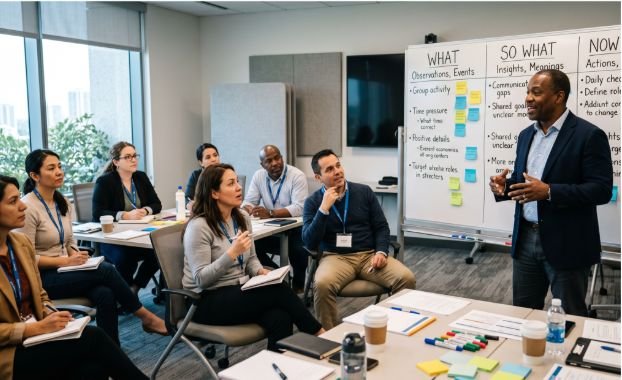


A retrospective should never feel like a recycled meeting where the same concerns appear on a board and disappear before the next sprint. I see it as a structured pause that gives a team permission to examine what really happened, surface hidden frustrations, recognize progress, and choose one meaningful change.
The right agile facilitation techniques for team retrospectives can turn silence into participation, tension into productive discussion, and scattered observations into practical action. When facilitators create psychological safety, use objective data, and guide the team through a clear process, retrospectives become one of the most valuable tools for continuous improvement.
How Do You Structure an Effective Agile Retrospective?
I organize a productive retrospective into five phases: set the stage, gather data, generate insights, decide what to do, and close the session. This structure gives the conversation direction without controlling what participants are allowed to say.
The facilitator should remain neutral throughout the process. I manage the agenda, timing, participation, and decision-making method, but I do not dictate the conclusions. My role is to help the team discover what happened and determine what it wants to change.
Phase 1: How Do You Create Psychological Safety at the Start?
The opening minutes influence the honesty of everything that follows. I begin by explaining that the team will examine systems, behaviors, tools, and working conditions rather than assigning personal blame.
The Retrospective Prime Directive can reinforce this expectation by encouraging participants to assume that everyone made the best decisions they could with the knowledge, skills, and resources available at the time.
How Does a One-Word Check-In Work?

I ask each participant to describe the previous sprint using exactly one word. Responses such as “rushed,” “focused,” “uncertain,” or “rewarding” quickly reveal the emotional temperature of the team without requiring a long opening discussion.
A mood check offers a visual alternative. Team members can select an emoji or place a marker on a simple mood scale. When the team needs a more positive starting point, I ask, “When were we at our best during this sprint?” This strength-focused question identifies successful practices worth repeating.
Phase 2: How Do Teams Gather Honest Retrospective Data?
The data-gathering stage should capture input from the entire team before group discussion begins. Otherwise, the first speaker or most senior participant may unintentionally shape everyone else’s answers.
Why Should You Use Silent Brainstorming?
I give participants several minutes to write observations independently on physical sticky notes or a shared digital board. Silent brainstorming gives quieter team members time to think and reduces groupthink.
I may combine those observations with sprint data such as blocked work, reopened tickets, missed commitments, cycle time, deployment failures, or customer feedback. Metrics should start a conversation, not become tools for judging individuals.
Which Retrospective Format Should You Choose?
Start, Stop, Continue works well when a team needs a direct process review. Participants identify behaviors to begin, discontinue, or preserve.
The 4Ls format asks what the team liked, learned, lacked, and longed for. I use it after complex projects because it uncovers emotional reactions, lessons, and missing resources.
The Sailboat or Speed Boat retrospective maps the team’s destination as an island, positive drivers as wind, obstacles as anchors, and future risks as rocks. It works especially well when people need to reconnect daily work with a broader product or business goal.
Mad, Sad, Glad is useful when emotions affected the sprint. I keep it constructive by asking what event or process created each feeling rather than allowing personal accusations.
Phase 3: How Do You Turn Observations Into Root-Cause Insights?
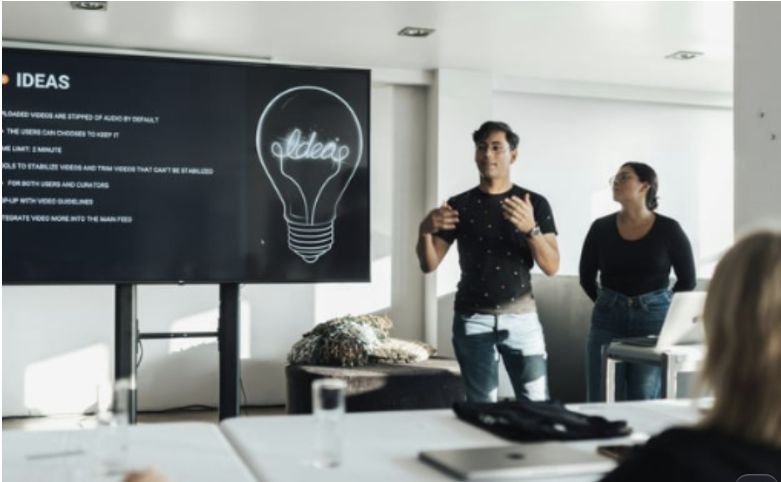
Gathering comments is not enough. Teams must recognize patterns and understand why important problems occurred.
How Does Affinity Mapping Find Common Themes?
I ask participants to group related notes and give each cluster a descriptive label. Affinity mapping can reveal that several seemingly unrelated complaints stem from the same issue, such as unclear priorities, delayed reviews, or excessive work in progress.
The Five Whys can then explore a selected problem more deeply. Instead of asking, “Why did you miss this?” I ask, “What conditions allowed this issue to happen?” This wording keeps attention on the system rather than the person.
When Should You Use 1-2-4-All?
The 1-2-4-All method helps prevent dominant voices from controlling solution generation. Participants consider a question individually, discuss it in pairs, combine into groups of four, and finally share with the entire team.
When conflict feels personal, I use externalization. A physical object, diagram, or digital marker represents the problem so participants can examine it together. This creates distance between the issue and the people involved.
Phase 4: How Do You Select Realistic Retrospective Actions?
A productive discussion can still fail if the team leaves with vague promises. The decision phase should narrow many ideas into one or two practical experiments.
Dot voting helps participants prioritize the most important themes. I limit the number of votes so the team must make meaningful choices.
Circles of Influence separate issues into three areas: what the team controls, what it can influence, and what requires action from leadership or another department. This prevents the group from spending its limited time designing solutions it cannot implement.
An Impact/Effort Matrix compares each proposed improvement according to its expected value and difficulty. High-impact, low-effort actions become obvious quick wins, while low-value initiatives can be removed.
Every approved action needs one owner, a target date, and a clear completion condition. Scrum.org also recommends making meaningful improvements visible, potentially by adding them to the next Sprint Backlog.
Phase 5: How Should You Close an Agile Retrospective?

I never end immediately after assigning tasks. The team should confirm that it understands and supports the commitments. A clear design team structure is also essential for growing companies, with defined roles and responsibilities that improve collaboration, accountability, and efficient product delivery.
A confidence scale asks each person to rate from 0% to 100% how likely the team is to complete the agreed action. Low confidence may reveal unclear ownership, excessive scope, or a dependency that the group overlooked.
ROTI, or Return on Time Invested, measures the usefulness of the meeting on a scale from one to five. A low score gives the facilitator immediate feedback and supports better future retrospective formats.
How Do You Facilitate Remote and Hybrid Retrospectives?
Remote retrospective techniques require clear instructions, visible timing, and equal access to the same digital workspace. I send the board in advance, allow silent contributions, and provide anonymous input when psychological safety is still developing.
In hybrid sessions, everyone should use the shared digital board, including people in the physical room. Otherwise, remote participants can quickly become observers rather than equal contributors.
What Facilitation Mistakes Make Retrospectives Ineffective?
Repeating the same template creates retrospective fatigue. I vary the format while keeping the five-phase structure consistent.
I also embrace silence instead of filling it immediately. Introverted participants may need additional time to formulate thoughtful responses. When one person dominates, I respectfully pause the discussion and invite someone who has not yet spoken.
The biggest mistake is creating too many actions. One completed improvement produces more value than five abandoned commitments. I review previous actions at the start of the next retrospective and keep them visible in the team’s normal work-management system.
Building Retrospectives That Lead to Continuous Improvement
I use agile facilitation techniques for team retrospectives to create a fair process in which every participant can contribute, evidence can challenge assumptions, and discussion leads to achievable change.
A creative activity alone will not make a retrospective successful. The session succeeds when the team feels safe enough to identify a genuine problem, understands its underlying causes, and takes ownership of a practical improvement.
Frequently Asked Questions (FAQs)
1. What are the best agile facilitation techniques for team retrospectives?
Useful techniques include silent brainstorming, Start, Stop, Continue, the 4Ls, Sailboat, affinity mapping, 1-2-4-All, Five Whys, dot voting, Circles of Influence, and the Impact/Effort Matrix.
2. How long should a sprint retrospective last?
A retrospective commonly lasts between 45 and 90 minutes, depending on the team size, sprint length, and complexity of the discussion.
3. How can facilitators encourage quiet team members?
Use silent writing, anonymous input, pair discussions, structured turn-taking, and sufficient thinking time before beginning an open conversation.
4. How many retrospective action items should a team create?
I recommend selecting one or two high-value actions with clear owners, deadlines, and completion criteria rather than creating a long list the team cannot realistically finish.
Turn Every Retrospective Into Your Team’s Competitive Advantage
I believe the most successful Agile teams are not the ones that avoid challenges—they are the ones that consistently learn from them. The right agile facilitation techniques for team retrospectives create an environment where every team member feels heard, discussions stay focused on improvement rather than blame, and ideas evolve into measurable results.
Whether I am leading an in-person, remote, or hybrid retrospective, my goal remains the same: build trust, uncover meaningful insights, and leave the meeting with one or two realistic actions that the team is committed to completing.
When retrospectives become a habit of continuous learning instead of a routine ceremony, every sprint becomes an opportunity to work smarter, collaborate better, and deliver greater value.