



I have seen promising community projects lose momentum because residents were invited to comment only after the most important decisions had already been made. Genuine participatory design for community development takes a different approach. It treats community members as decision partners whose experiences, knowledge, ideas, and priorities shape a project from its earliest stages through implementation and evaluation.
This approach can be used to improve housing, public spaces, transportation, healthcare, education, environmental programs, social services, and neighborhood development. Instead of designing for people, organizations design with them, creating solutions that are more relevant, inclusive, trusted, and sustainable.
What Is Participatory Design in Community Development?
Participatory design is a collaborative process in which the people affected by a project help identify problems, explore opportunities, develop ideas, test solutions, and evaluate results.
Community members are not simply research participants. They contribute local knowledge, challenge assumptions, influence priorities, and help determine what success should look like.
The principles of human centered design for social innovation strengthen this approach by grounding decisions in lived experience, collaborative research, early testing, and continuous improvement.
The process may involve residents, nonprofit organizations, local businesses, public agencies, educators, healthcare workers, youth groups, service providers, and community leaders. Each group offers a different perspective on how a proposed service, place, or program could affect daily life.
Why Community Participation Improves Development Outcomes
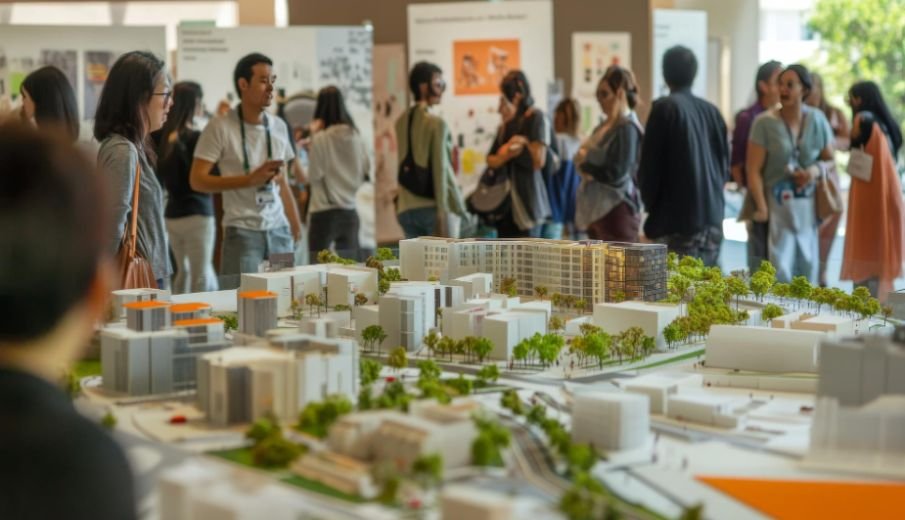
Outside professionals may bring technical knowledge, but residents understand the realities of their neighborhoods. They know which services are difficult to access, where safety concerns exist, why earlier projects failed, and which informal networks already support the community.
Including this knowledge early can prevent costly mistakes. It can also reveal existing strengths, such as trusted local organizations, shared spaces, cultural traditions, global volunteer networks, and community-led initiatives.
Participation also creates ownership. People are more likely to support, use, protect, and improve a solution when they have helped shape it. The process can strengthen relationships, develop local leadership, and build confidence among residents who are often excluded from formal decisions.
Participatory Design vs Community Consultation
Consultation and participation are not the same.
Understanding social innovation vs social entrepreneurship can also help organizers decide whether a community solution requires wider system change or an entrepreneurial model for funding, delivery, and growth.
Consultation usually involves presenting a proposal and asking people for feedback. The organization leading the project still controls the problem definition, budget, available choices, and final decision.
Participatory design begins earlier. Community members help determine what should be addressed before a solution is selected. Their role continues through idea generation, testing, implementation, and review.
The distinction depends on power. Asking residents what they think is consultation. Giving them meaningful influence over priorities and decisions is participation.
Core Principles of Community-Led Design

Inclusion and Representation
A successful process must reach beyond the people who regularly attend public meetings. Organizers should actively involve groups affected by the project, particularly those who face barriers to participation.
Accessible venues, interpretation, transport support, childcare, flexible schedules, digital options, and fair compensation can make participation more inclusive. Organizers should also examine whether young people, older residents, disabled people, renters, minority groups, and people with limited digital access are represented.
Respect for Local Knowledge
Community members are experts in their own lived experiences. Their observations should carry weight alongside professional research, technical data, and addressing institutional and community barriers.
Local knowledge can reveal seasonal problems, cultural expectations, informal services, historical tensions, and practical obstacles that external teams may overlook.
Transparency and Shared Power
Organizations should explain what decisions participants can influence, what constraints exist, how funding works, and who has final approval.
Pretending that everything is open for discussion when major decisions have already been fixed damages trust. Clear boundaries are more respectful than offering false influence.
Iteration and Continuous Learning
Participation should not end after one workshop. Ideas need to be tested, reviewed, revised, and brought back to the community.
Regular feedback helps teams identify unintended consequences before investing heavily in implementation.
How to Run a Participatory Community Design Process

1. Build Trust Before Collecting Ideas
Begin by learning about the community’s history, relationships, concerns, and previous experiences with development projects. Work through trusted local groups rather than expecting residents to immediately trust an unfamiliar organization.
2. Map Stakeholders and Community Assets
Identify everyone affected by the issue, including people who may not hold formal authority. Map existing services, skills, spaces, organizations, networks, and resources before focusing only on deficiencies.
An asset-based approach prevents communities from being described solely through their problems.
3. Define Roles and Decision Rights
Participants should understand how their contributions will be used. Clarify who controls funding, who approves proposals, how disagreements will be handled, and whether residents can challenge or reject options.
4. Explore Needs Through Multiple Methods
Interviews, listening sessions, storytelling, community walks, participatory mapping, observation, photography, and journey mapping can reveal different aspects of an issue.
Using several methods allows people to contribute in ways that suit their communication styles and abilities.
5. Generate and Prioritize Ideas Together
Co-design workshops can help residents and professionals develop possible solutions. Ideas can then be assessed using locally agreed criteria such as accessibility, affordability, urgency, cultural relevance, environmental impact, and feasibility.
6. Create and Test Prototypes
Prototypes allow communities to experience an idea before it becomes permanent. These may include paper service models, temporary street layouts, mock-ups, role-playing exercises, pilot programs, or small-scale events.
Feedback should lead to visible changes, showing participants that their involvement has practical value.
7. Plan Implementation and Ownership
A strong process identifies responsibilities, resources, timelines, funding needs, maintenance arrangements, and communication channels.
Community participation should continue during delivery. Resident advisory groups or local oversight committees can help monitor progress and address emerging problems.
Common Challenges and How to Address Them

Unequal power is one of the biggest risks. Professionals may dominate discussions through technical language, control of funding, or institutional authority. Skilled facilitation, plain language, transparent decision rules, and independent community representatives can create a fairer process.
Participation fatigue can develop when residents repeatedly share their experiences without seeing action. Teams should communicate progress, explain delays, report which ideas were adopted, and acknowledge recommendations that could not be implemented.
Conflicting priorities are also normal. The goal is not to eliminate disagreement but to create a fair process for examining trade-offs and reaching decisions.
How to Measure Community Impact
Evaluation should consider both the final project and the quality of participation.
Useful measures include participant diversity, repeat involvement, accessibility, resident influence, trust, adoption of community ideas, service use, satisfaction, local leadership development, and the distribution of benefits.
Communities should help define these measures. Institutional success may focus on budgets and deadlines, while residents may prioritize dignity, safety, belonging, convenience, or long-term control.
Frequently Asked Questions
1. What is participatory design for community development?
Participatory design for community development is a collaborative approach in which residents and stakeholders help define problems, create ideas, test solutions, guide implementation, and evaluate community outcomes.
2. How is participatory design different from public consultation?
Public consultation gathers reactions to proposals, while participatory design gives community members an active role in shaping priorities, decisions, solutions, and evaluation criteria.
3. Which methods work best for community participation?
Effective methods include community mapping, interviews, storytelling, design workshops, neighborhood walks, photovoice, journey mapping, temporary prototypes, advisory groups, and feedback sessions.
4. How can organizations avoid tokenistic participation?
They should involve residents before decisions are finalized, explain decision-making power, compensate participants fairly, remove access barriers, report outcomes, and demonstrate how community input changed the project.
Building Lasting Change Together
I believe the greatest value of participatory design is not simply that it produces better projects. It changes who is recognized as an expert and who is allowed to influence the future of a community.
When organizations share information, resources, responsibility, and decision-making authority, participation becomes more than an engagement exercise. It becomes a practical way to build trust, strengthen local capacity, and create solutions that communities can continue developing long after the original project ends.